India records its driest June in 12 years, raising concerns for farmers. Government ensures enough grain stocks to manage potential shortages.
India records its driest June in 12 years, raising concerns for farmers. Government ensures enough grain stocks to manage potential shortages.
India has reported its driest June in 12 years and the fifth-driest since the establishment of nationwide rainfall records in 1901, according to data from the India Meteorological Department (IMD).
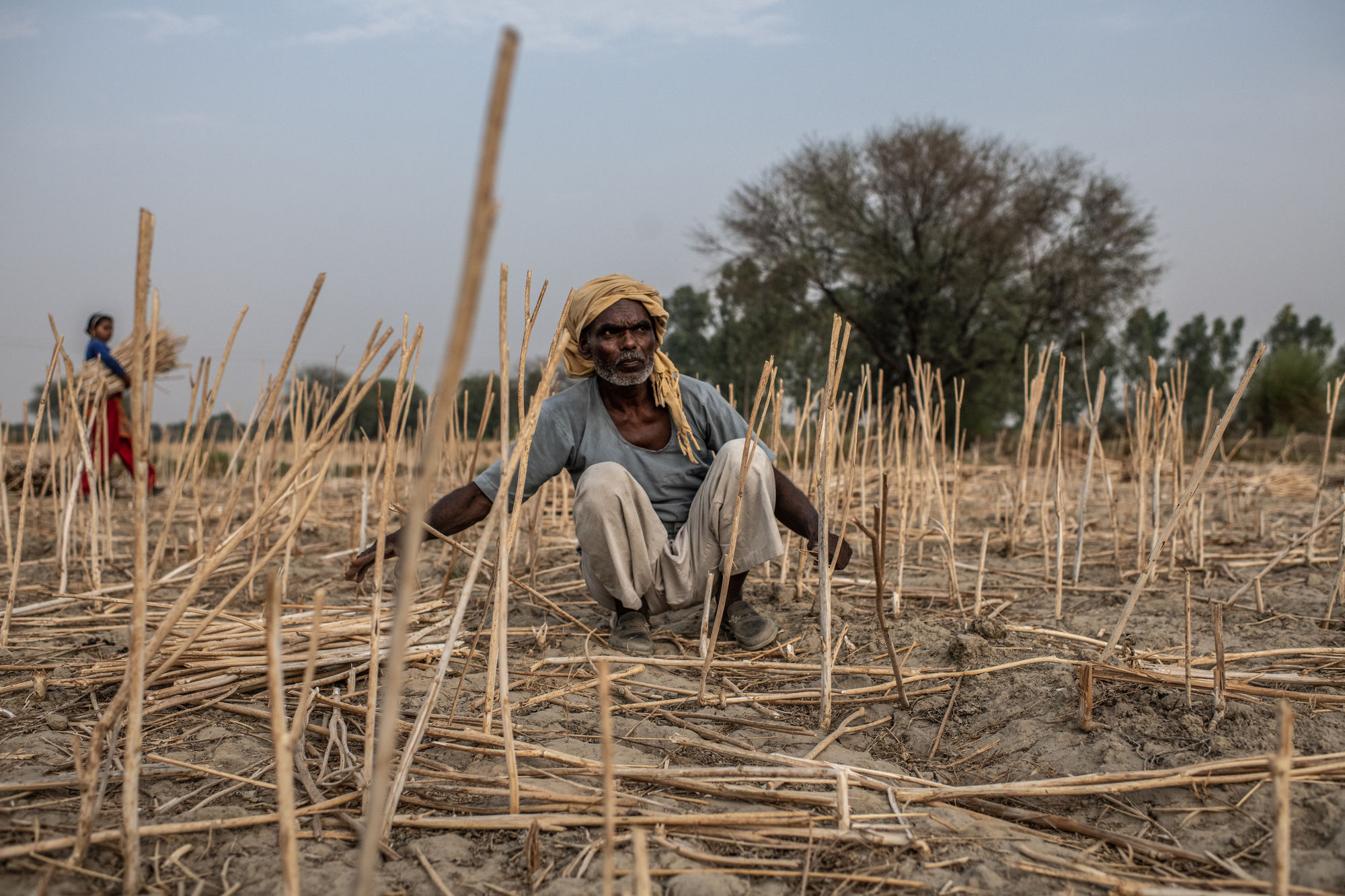
The IMD anticipates below-normal rainfall for July, leading to growing apprehension regarding crop sowing advancements for the year. Official statistics reveal a nearly 23% reduction in the area planted with summer crops compared to the same timeframe last year, with rice cultivation dropping by approximately 25%.
Seasonal monsoon rains are vital for millions of farmers who depend on them for crop sowing, and any shortfall or delay can have a pronounced impact on their yields. By the end of June, farmers had cultivated summer crops over 18.27 million hectares, a decline from the 23.65 million hectares sown at the same point in the previous year.
The primary summer crops in India consist of rice, pulses, coarse cereals, oilseeds, cotton, sugarcane, and jute, all of which rely heavily on the southwest monsoon, responsible for about 70% of the nation’s annual rainfall.
Typically, the rainy season arrives in Kerala around June 1 and then progresses northward across the country. However, this year’s onset was postponed by three days, and the monsoon’s progress slowed for approximately two weeks in several western regions, preventing timely field preparation and planting.
The slowdown in rice sowing has been even more pronounced, with farmers planting the grain across only 2.58 million hectares this season compared to 3.44 million hectares the previous year—an almost 25% decrease.
Close to half of India’s farmland lacks assured irrigation and hence relies predominantly on rainfall, making the monsoon’s timing and distribution critical for innumerable farmers.
Experts indicate that insufficient rainfall will also diminish domestic oilseed production, increasing reliance on imported edible oils. Nonetheless, the total effect on harvests remains uncertain, as the monsoon season extends until September, providing potential for rainfall recovery and the chance for farmers to compensate for delayed sowing.
India commenced this monsoon season with record rice stocks, with government warehouses holding 39.7 million tonnes as of July 1—approximately three times the official buffer requirement of 13.5 million tonnes. This stockpile offers a buffer against short-term supply disruptions.
The IMD’s predictions for June rainfall initially estimated 92% of the long-term average, but actual figures revealed a 39.8% shortfall. “This was the fifth-driest June for India since 1901 and the driest in 12 years,” remarked IMD Director General Mrutyunjay Mohapatra.
In anticipation of July, typically the wettest month of the monsoon season, attention shifts as it usually accounts for about one-third of the total rainfall received during the four-month season, coinciding with peak sowing for most monsoon crops.
The government has amplified preparations for the possible outcomes of a weak monsoon and the El Nino phenomenon, characterized by unusually warm surface ocean waters in the eastern tropical Pacific.
Agriculture Minister Shivraj Singh Chouhan noted that authorities have pinpointed 315 districts vulnerable to below-normal rainfall and devised contingency measures, including short-duration crops, less water-intensive varieties, and improved water conservation strategies.
“We are preparing in advance, not waiting for a crisis,” Chouhan stated following a recent meeting on the pressing issue. He sought to reassure farmers, emphasizing, “there is no need to panic,” and maintaining that buffer stocks of rice and wheat remain stable, posing no immediate threat to food security despite a weak monsoon start.
Keep in touch with our news & offers
Subscribe to Our Newsletter
Thank you for subscribing to the newsletter.
Oops. Something went wrong. Please try again later.