The Democratic Republic of Congo accuses Rwanda of violating international treaties, seeking accountability at the International Court of Justice.
The Democratic Republic of Congo accuses Rwanda of violating international treaties, seeking accountability at the International Court of Justice.
The Democratic Republic of Congo has filed a case against Rwanda at the International Court of Justice (ICJ), accusing its neighbor of breaching multiple international treaties.
In a statement, DR Congo said Rwanda had dispatched forces and backed armed groups to carry out unlawful military operations on its territory following the 1994 Rwandan genocide.
On Friday, Congolese Justice Minister Guillaume Andali stated that his country is seeking accountability for alleged breaches of conventions covering genocide prevention, racial discrimination, women’s rights, and torture.
There has been no response yet from Rwanda regarding DR Congo’s filing, but the country has long dismissed the accusations of supporting rebel groups within Congo’s borders.
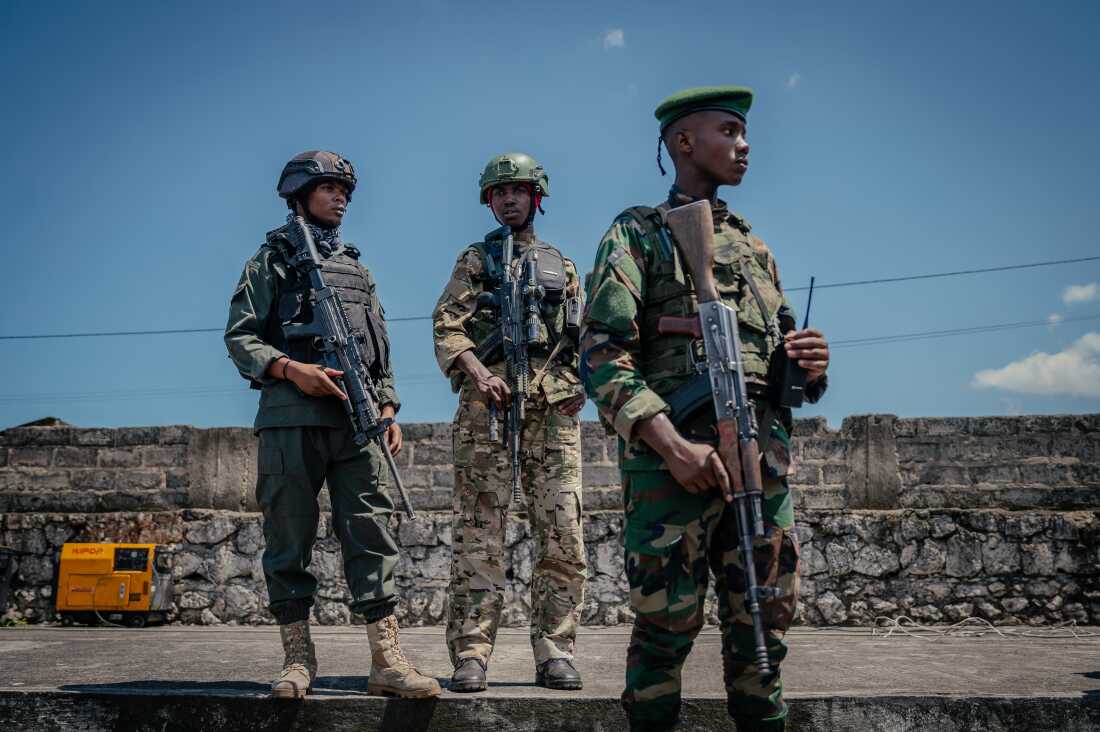
United Nations experts and Western governments have suggested that Rwanda is indeed supporting M23, a significant armed group operating in eastern DR Congo.
The application submitted to the ICJ requests that Rwanda cease its alleged crimes and award reparations to the Congolese authorities and victims of these actions.
The ICJ is set to examine the claims brought forth by DR Congo.
This is not the first time DR Congo has taken legal action against Rwanda at the ICJ; an earlier case was dropped by Congolese authorities in 2001. In 2006, the ICJ dismissed another case after ruling that it could not proceed due to Rwanda’s lack of recognition of the court’s jurisdiction.
The decades-old conflict in the DR Congo traces its roots back to the Rwandan genocide in 1994, where approximately 800,000 individuals—predominantly from the Tutsi community—were killed by ethnic Hutu extremists.
Fearing retaliation, an estimated one million Hutus fled to the now-democratic Republic of Congo, further exacerbating ethnic tensions, particularly affecting the marginalized Tutsi group in the east known as the Banyamulenge.
On two occasions, Rwanda’s army invaded DR Congo, claiming to pursue those responsible for the genocide while collaborating with members of the Banyamulenge and other armed factions.
Currently, one of the Hutu factions, the Democratic Forces for the Liberation of Rwanda (FDLR), which includes members accountable for the original genocide, remains active in eastern DR Congo.
Rwanda has labeled the FDLR a “genocidal militia,” arguing that its ongoing presence in eastern DR Congo poses a threat to Rwanda itself. Conversely, Rwanda accuses Congolese authorities of collaborating with the FDLR, a claim that DR Congo denies.
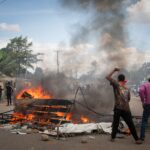
Hostilities escalated in January when M23 captured extensive territories in the mineral-rich eastern region, including the regional capital of Goma, with ongoing fighting despite a peace deal, mediated by the United States, signed by Rwanda and DR Congo in December.
Keep in touch with our news & offers
Subscribe to Our Newsletter
Thank you for subscribing to the newsletter.
Oops. Something went wrong. Please try again later.